
🚨Urgent: Missile Strikes Shelter in Ukraine! Rush Emergency Aid!
How Plastic Pollution Hijacks Octopus Instincts and Scrambles Ocean Survival
Matthew Russell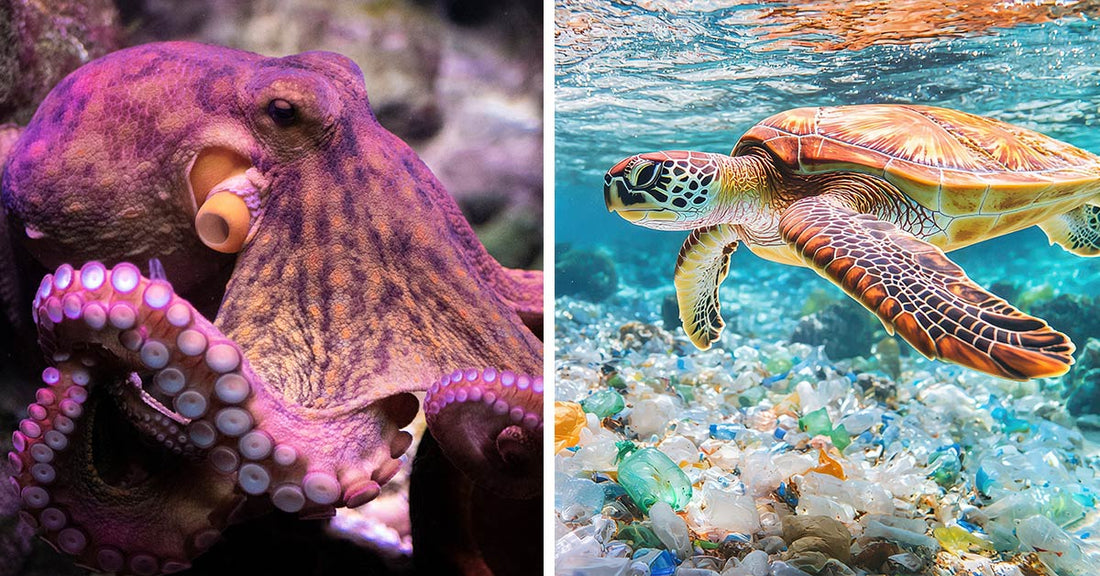
Plastic waste in the ocean is everywhere. Hard plastics, fishing gear, bags, and microplastics float in gyres and wash along coasts. Sea life encounters them constantly. This pollution doesn’t just choke animals. It leaks chemicals into water and alters marine behavior.
A study led by researchers at Florida Atlantic University found that one plastic-derived chemical, **oleamide**, can disturb how octopuses and their prey interact. Scientists documented changes in hunting patterns, avoidance responses and ecosystem dynamics in controlled tests, FAU Newsdesk reports.

Marine plastic releases chemicals into seawater.
Octopus Minds and Chemical Confusion
Octopuses rely on chemical cues in water to find food and dodge threats. In lab aquariums, scientists exposed common South Florida octopuses (*Octopus vulgaris*) and their prey to oleamide, a compound leached from degrading plastics, Phys.org explains.
After exposure, octopuses shifted from preferring hermit crabs to selecting free-living crabs. At the same time, prey animals like crustaceans displayed reduced predator-avoidance behavior. In essence, their instincts were dulled, even when a predator loomed nearby, FAU Newsdesk notes.
More Encounters, Not More Feeding
Exposure didn’t make octopuses better hunters. The number of successful kills stayed flat. Instead, interactions that didn’t end in consumption — failed attacks and quick grabs — soared, according to Phys.org.
Researchers think oleamide disrupts chemosensory signals. Prey may confuse the chemical for natural cues like decay or food, and stay out in the open. As Scienmag reports, predators, in turn, appear more exploratory but less accurate in capturing prey.

Oleamide is a compound that leaches from degrading plastics.
Broader Impacts on Coastal Food Webs
These subtle behavioral changes may ripple outward. Phys.org highlights potential knock-on effects: When prey ignore danger and predators struggle to secure meals, populations and species balances can shift. Coastal food webs may reorganize around new patterns of contact and survival.
Ocean plastics also threaten marine life beyond behavior changes. Hard and soft plastics have been found in seabirds, sea turtles, and mammals — in some cases in lethal doses. Less than a handful of ingested plastic particles can raise mortality risk sharply for some species, KPBS reports.

Octopuses rely heavily on chemical cues to hunt.
Plastic Is Already in the Food Web
Plastic pollution is not just aesthetic. It pervades the marine food chain. Microplastics can be ingested by tiny zooplankton and then pass up to larger fish and predators. This means chemical contaminants can cascade across levels of life.
The new octopus study adds a behavioral angle. It shows that plastic’s impact goes beyond ingestion and entanglement. It intrudes into biological communication itself.
