
Seven-Arm 'Septopus' Sparks Mystery Along North Sea Coast
Matthew Russell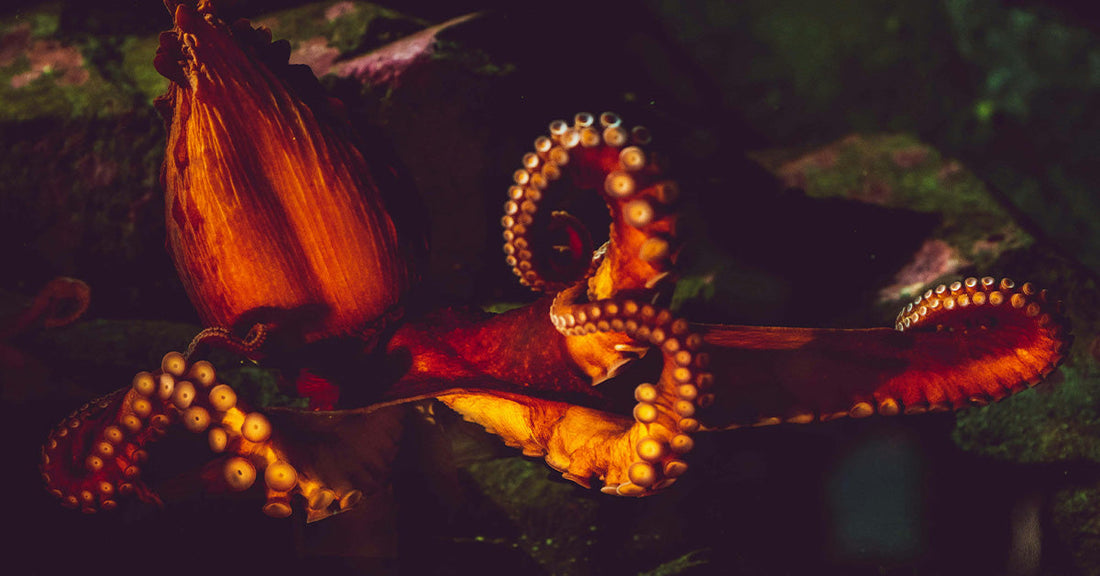
The first hints of the mystery lay scattered across the sand. A beachgoer walking the coastline at Collieston noticed thick, sucker-lined arms unlike anything usually found along Aberdeenshire’s shore. Staff at Forvie National Nature Reserve soon stepped in, and what followed stunned the region.
Catriona Reid, the reserve’s manager, said the arms were unlike any local species, noting their width and prominent suckers, far larger than those of a curled octopus, New York Post reports. The discovery set off a quiet scientific scramble.
More pieces of the creature turned up over the next days — additional arms, a glossy purple beak, and fragments spread across the beach. Conservationists worked carefully to piece together the clues.

A beachgoer discovered the first severed arms in Aberdeenshire.
The Species Behind the Mystery
The animal was soon identified as a seven-arm octopus, also called a septopus, a deep-sea giant known scientifically as *Haliphron atlanticus*. Though the name implies seven limbs, males actually have eight; one functions as a reproductive arm tucked into a pouch near the eye, a fact confirmed through research by the University of Gothenburg.
This species normally lives far below sunlight, at depths beyond 1,600 feet, and grows to impressive size. Females can reach lengths of 13 feet, and some arms stretch more than 20 inches, according to WION. Only a handful have been observed alive worldwide.
Its appearance on a Scottish beach was, by any measure, shocking.

Researchers initially considered the possibility of a giant squid.
How Did a Deep-Sea Giant Reach Land?
Marine biologist Dr. Lauren Smith described the find as “extraordinary.” She noted that the animal may have been caught accidentally in a trawl net and discarded at sea, or attacked by a whale before drifting toward the coast, as she explained to the New York Post.
Another possibility: the deep-dwelling animal may have wandered into shallow waters and become disoriented, a theory also mentioned by WION.
The remains are now preserved for study. Dr. Smith told BBC News that they currently rest in her freezer while samples are prepared for institutions across the UK, where genome analysis and stable-isotope studies will help reveal the animal’s history and movements.
A Rare Glimpse Into the Deep
Forvie’s dunes and quiet estuary usually bring sightings of seals and seabirds. This time, the tide delivered something few humans ever see.
Scientists now hope the septopus fragments will offer new insight into one of the ocean’s most elusive giants — a deep-sea wanderer that surfaced, briefly and mysteriously, in the North Sea.
