
🚨Urgent: Missile Strikes Shelter in Ukraine! Rush Emergency Aid!
A Simple Sun-Powered Glow Is Stopping Sea Turtles From Dying in Fishing Nets
Matthew Russell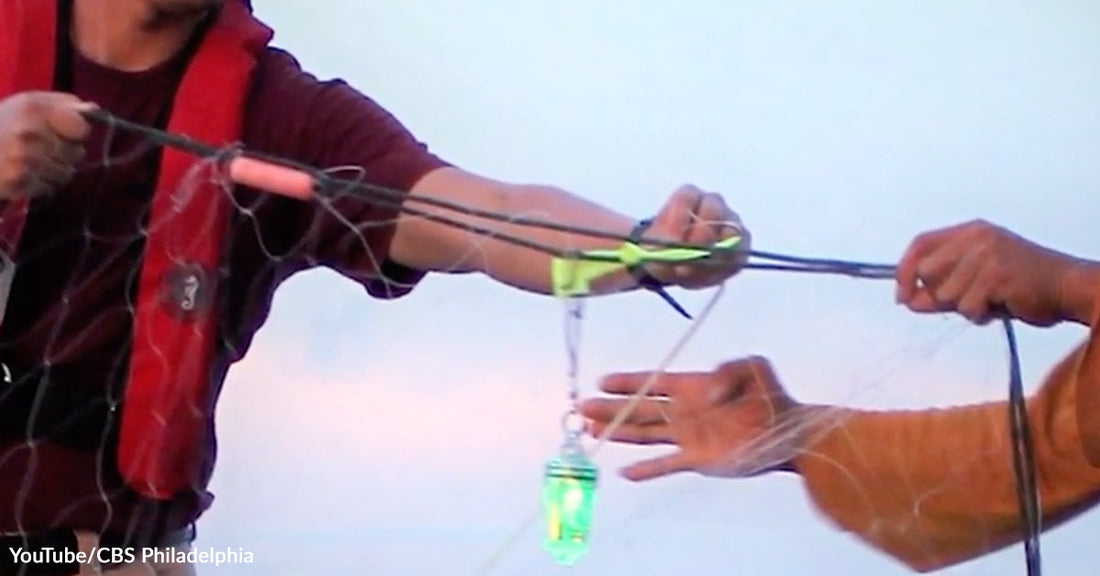
At night, fishing nets vanish into dark water.
So do sea turtles.
Entanglement in gillnets remains one of the most persistent threats facing sea turtles worldwide. A growing body of field research now shows that light — carefully applied — can turn deadly gear into something turtles actively avoid. Solar-powered LED lights attached to fishing nets have been shown to reduce turtle entanglement by 63 percent, according to controlled trials conducted off the coast of Mexico, Popular Science reports.
The idea is simple. In darkness, turtles do not detect the fine mesh of nets until it is too late. Illuminated nets create a visible boundary, giving turtles time to steer clear.

Sea turtles often cannot see fishing nets at night.
Solar Nets That Fishers Can Actually Use
Earlier attempts to light fishing gear relied on battery-powered devices. They were heavy. Expensive. Short-lived. Disposal posed its own environmental cost, Phys.org explains.
Solar-powered LEDs change that equation. The lights recharge during daylight, flash intermittently to conserve energy, and can remain active for more than five days without sunlight. Designed to function as standard buoys, they thread onto net float lines without weighing gear down or complicating deployment.
Field tests found that the lights did not reduce target catch. In some cases, yellowtail catch rates were slightly higher, though not statistically significant, according to reporting by Good Good Good.

Solar-powered LED lights make nets visible in dark water.
YouTube/CBS Philadelphia
Built With Fishing Communities, Not For Them
The breakthrough did not originate in a lab.
The concept emerged through collaboration with small-scale fishers in northwestern Mexico, who suggested illuminating the nets themselves. Researchers from Arizona State University refined the design through daily use alongside coastal crews, an approach that helped rebuild trust in regions where conservation rules have strained fishing livelihoods, Good News Instead reports.
That partnership matters. Small-scale coastal fisheries provide nearly half of the world’s seafood and sustain entire communities. Gear that disrupts those systems rarely survives.
Fishers involved in the trials ultimately asked to keep the illuminated nets, citing easier retrieval and fewer dangerous encounters with trapped turtles.
A Tool With Global Potential
Sea turtles already face pressure from climate change, habitat loss, pollution, and disease. Entanglement compounds the risk.
Solar-powered net lighting offers something rare in marine conservation. It protects wildlife. It preserves livelihoods. And it scales.
Manufacturers are now working to bring the lights to market within the next few years. If adopted widely, a simple glow in dark water could save countless turtles — without costing fishers their way of life.
