
🚨Urgent: Missile Strikes Shelter in Ukraine! Rush Emergency Aid!
The Pentagon Is Keeping 74 Fallen Navy Sailors Off The Vietnam Wall
Matthew Russell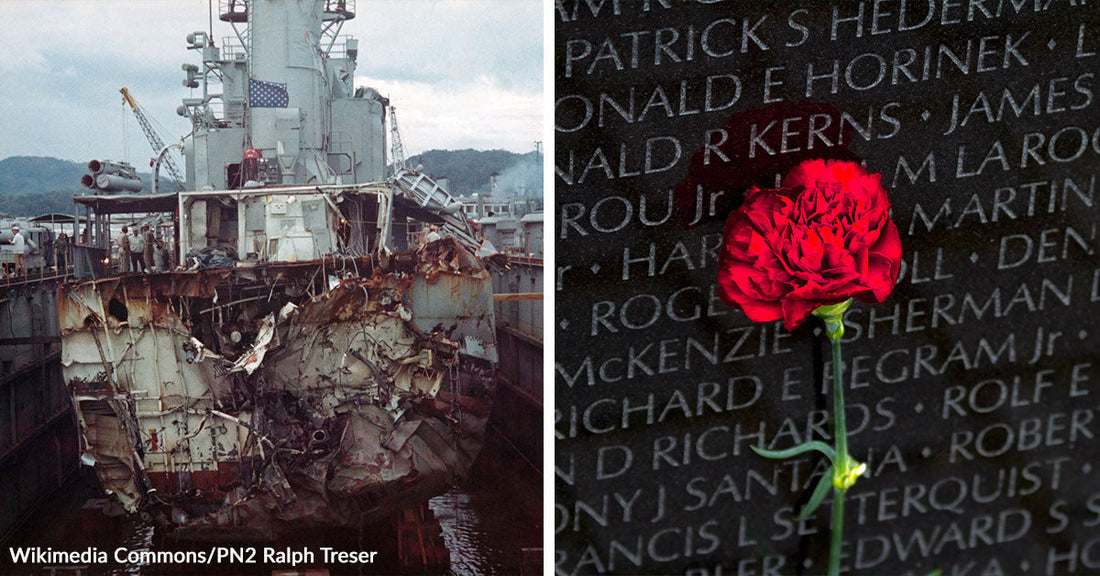
The Vietnam Veterans Memorial Wall is meant to hold the names of Americans who gave their lives in connection with the Vietnam War. For the families of 74 sailors killed aboard the USS Frank E. Evans, that promise remains unfinished.
On June 3, 1969, the Navy destroyer collided with the Australian aircraft carrier HMAS Melbourne during a nighttime exercise in the South China Sea. The impact split the ship in two. The bow sank within minutes, taking most of the dead with it.
According to Task & Purpose, the disaster killed 74 sailors, including three brothers and the son of a senior chief who survived the collision.
Their names are not on the Wall.

Photo: Wikimedia Commons/PN2 Ralph Treser, License: Public Domain
The USS Frank E. Evans was cut in two during a 1969 collision in the South China Sea.
The Dispute Centers On A Pentagon Rule
The Department of Defense has long maintained that the sailors do not meet the criteria for inclusion because the collision happened outside the officially defined Vietnam combat zone. The Government Accountability Office found that DOD has reviewed the case and continued to reject the request because the ship was not, under current rules, inside the combat zone or in direct support of combat operations at the moment of the accident.
That explanation has never satisfied the families.
The USS Frank E. Evans had served in the Vietnam War for years. Task & Purpose reported that the ship supported Marine landings, Army operations, and other combat missions. Weeks before the collision, it had fired close to 2,000 rounds in support of Operation Daring Rebel.
To survivors and relatives, the connection is clear. These men were part of the Vietnam War effort. They died while still serving in that era and after direct combat support.

The sailors’ names are not listed on the Vietnam Veterans Memorial Wall.
Families Have Carried This Fight For Decades
The pain of the omission goes back to the early years of the memorial. Navy Times, carrying Associated Press reporting, described the long push by survivors and families to persuade the Pentagon to add the names.
DOD has offered other forms of recognition in the past, but many families believe a separate tribute cannot replace the Wall. The Wall is where the nation records its Vietnam War dead. Leaving these sailors elsewhere sends a painful message that their sacrifice sits outside the country’s central act of remembrance.
That fight continues. WGRZ reported that advocates are still pressing against the Pentagon policy that keeps the sailors’ names off the memorial.

Survivors and families have pushed for the names to be added for decades.
A Technical Boundary Should Not Erase Their Sacrifice
Rules matter. But so does judgment.
GAO notes that 380 names have been added to the Wall since its 1982 dedication, including cases meant to correct omissions. The Pentagon has the authority to review requests and determine whether a name belongs. In this case, it should use that authority to confront the human cost of an overly narrow rule.
The 74 sailors of the USS Frank E. Evans served their country during the Vietnam War. Their families have waited more than half a century for the same recognition given to others who did not come home.
Pentagon leaders should revisit the policy, work with survivors and families, and allow these names to be added to the Vietnam Veterans Memorial Wall.
Click below to make a difference.
