
🚨Urgent: Missile Strikes Shelter in Ukraine! Rush Emergency Aid!
Rare Drone Sighting Captures One of the Last Wedgefish Alive
Matthew Russell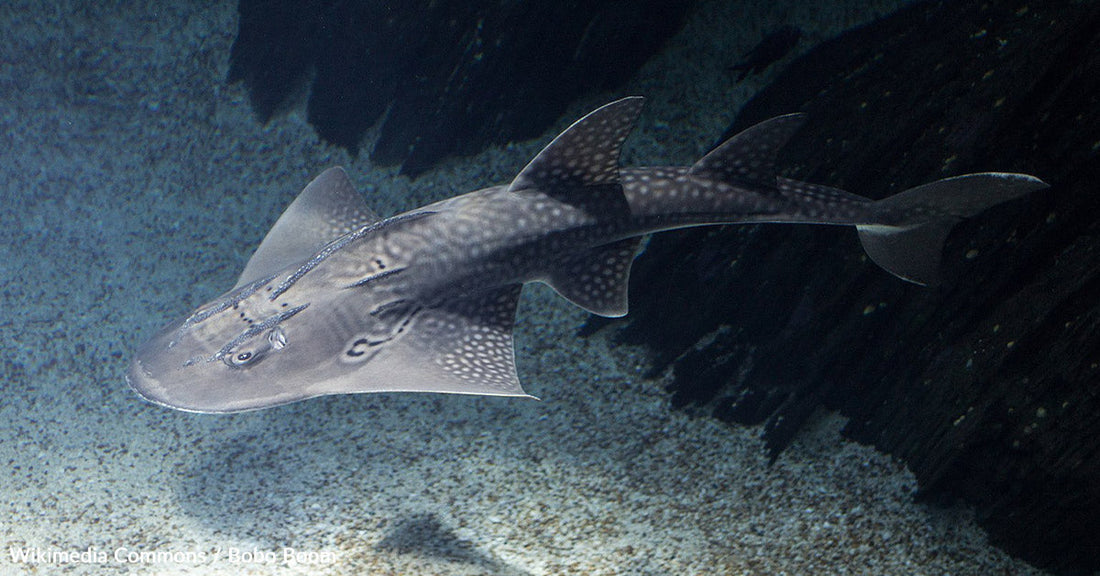
.jpg)
Just 200 meters off the coast of Shark Bay, Western Australia, a drone captured a slow-moving shadow gliding through clear shallows. It was a whitespotted wedgefish—a critically endangered species—and the footage marked one of the rarest sightings in recent years.
For 10 surreal minutes, the massive fish led a procession of trevally, cobia, and sharksuckers through the lagoon, a silent parade filmed by wildlife videographer Jake Mason, IFLScience reports.
Wedgefish look like a mashup between sharks and rays, and their unique silhouette makes them easy to spot—if they’re there to spot at all. Of the 11 known species, 10 are listed as critically endangered. This group of fishes is now considered among the most threatened marine families on Earth, according to a sweeping analysis published in Aquatic Conservation: Marine and Freshwater Ecosystems.

Photo: Wikimedia Commons / apteryx54, License: CC BY 4.0

A wedgefish was filmed just off the coast of Shark Bay, Western Australia.
Hunted for Their High-Value Fins
What’s pushing these ancient animals toward extinction isn’t mystery—it’s demand. Wedgefish are hunted intensely for their meat and, more lucratively, their large fins. These fins fetch sky-high prices in the global shark fin trade—up to $964 per kilogram in some markets. According to Aquatic Conservation, their pale color and size make them especially prized, and this commercial pressure has devastated populations across Southeast Asia and the Arabian Gulf.
Wedgefish are often caught in bottom trawls and gillnets, both as targeted species and as bycatch. They favor shallow, coastal waters—areas increasingly overfished and underregulated. Some species, such as the clown wedgefish and the false shark ray, may already be functionally extinct.

Photo: Wikimedia Commons / Geoff Shuetrim, License: CC BY 4.0

The sighting is one of the rarest marine events ever captured on drone.
What We’re Only Just Learning
Despite their size and visual distinctiveness, wedgefish are poorly understood. That’s changing slowly. In a year-long study off the coast of northwestern Australia, scientists used acoustic tags and accelerometers to track bottlenose wedgefish in Ningaloo Reef. The research, detailed in Marine Biology, revealed that these massive rays are mostly nocturnal, remain close to home, and favor depths just a few meters deep.
Researchers observed previously undocumented behaviors, including a movement they believe may be a form of “settling” where the wedgefish gently nestles into the seabed—possibly to regulate body temperature or avoid UV exposure. Most individuals used activity spaces of just 4–8 square kilometers, making even small-scale coastal development a threat to their survival.

Photo: Wikimedia Commons / Bobo Boom, License: CC BY 2.0
.jpg)
Wedgefish are critically endangered due to extreme fishing pressure.
Misidentified and Overlooked
One challenge in protecting wedgefish lies in their own identity. For years, multiple species were lumped together in fishery records due to their similar appearances. This confusion has made it hard to establish accurate range maps or population trends. Catch data is limited or inconsistent, and where it does exist, it shows steep declines, Aquatic Conservation reports.
Without clarity on where wedgefish live and how many remain, efforts to conserve them face serious roadblocks. Many species may vanish before they are fully studied.
A Fragile Stronghold in Australia
Australia has emerged as a final refuge for several wedgefish species. Compared to other parts of the Indo-Pacific, fishing pressure here is relatively low, and key populations—like those in Ningaloo—benefit from protected zones. The eyebrow wedgefish, which occurs primarily in Australian waters, is the only member of its family not currently listed as critically endangered, according to BBC Discover Wildlife.
Still, their habitats remain dangerously accessible. The shallow, sandy lagoons they favor often overlap with recreational fishing areas and coastal tourism. Even in conservation hotspots like Shark Bay, their future is far from secure.
One Sighted, Many Disappearing
The Shark Bay drone footage, striking as it was, may be the only glimpse many people ever get of a living wedgefish. The visual is mesmerizing. But the reality beneath the surface is sobering.
Wedgefish are ancient, elusive, and in trouble. Their survival depends on more than chance sightings—it depends on active protection, trade regulation, and habitat preservation. The next time one glides through shallow water, it shouldn’t be a miracle.
