
🚨Urgent: Missile Strikes Shelter in Ukraine! Rush Emergency Aid!
Trump Administration's New Environmental Plan Opens the Floodgates for Mass Wetland Destruction
Matthew Russell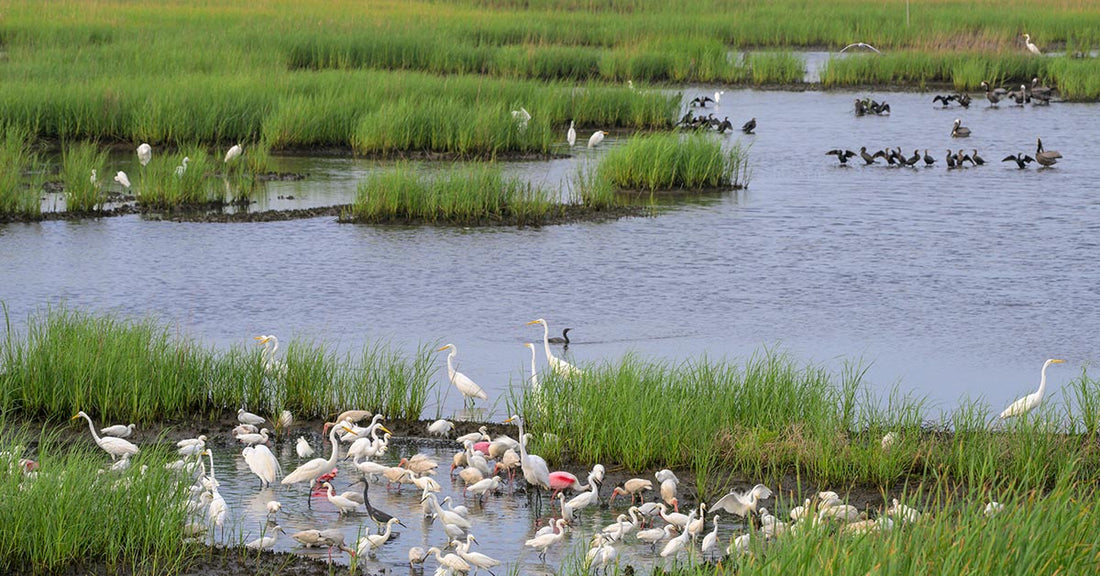
Millions of acres of marshes, swamps, prairie potholes and desert washes could soon lose federal protection under a new Trump administration proposal that sharply narrows what counts as “waters of the United States” under the Clean Water Act.
The draft rule would protect only wetlands that touch a “relatively permanent” river or lake and hold surface water at least through the wet season, a definition that would exclude most seasonal and rain-fed waters, according to a regulatory analysis reviewed by E&E News/Politico Pro.
Federal estimates suggest only about 19% of mapped wetlands in the lower 48 states would still qualify for safeguards if the proposal takes effect, leaving more than 80 percent newly exposed to dredging and pollution. Inside Climate News reports that a geospatial analysis by the Natural Resources Defense Council (NRDC) found between 38 million and 70 million acres at risk under scenarios similar to the rule.

The proposal would remove federal protections from most U.S. wetlands.
From “Waters of the U.S.” to Isolated Puddles
At the heart of the proposal is a legal and hydrologic argument. The administration claims that the Supreme Court’s 2023 Sackett v. EPA ruling limits the Clean Water Act to wetlands that are “indistinguishable” from larger, permanent waterways. Officials now read that to exclude groundwater, most isolated wetlands, many intermittent streams and all ephemeral streams that flow only after storms or snowmelt, The Hill reports.
Yet scientists and advocates stress that those “minor” waters function as the capillaries of river systems. Ephemeral and intermittent streams supply more than half of the flow in many drinking-water rivers, and wetlands next to them store floodwater, trap pollution and anchor habitat, NRDC experts told The New York Times.
In the arid West, where washes and seasonal streams dominate, the change could be especially stark. According to the Center for Biological Diversity, a prior Trump-era rule already stripped protections from vast stretches of desert waterways and wetlands, a shift that could leave more than 95% of waters in states like Arizona and New Mexico without meaningful safeguards.

Only wetlands with a “relatively permanent” surface connection would qualify.
Winners and Losers
Farm groups, builders and industrial trade coalitions have lobbied for a narrower rule for years. They argue that the new definition finally draws a clear line around which ditches, ponds and wetlands need federal permits for pollution or fill. EPA Administrator Lee Zeldin said the proposal would bring “relief” to farmers, ranchers and landowners who want a straightforward national standard, according to The New York Times.
Agricultural officials interviewed by Inside Climate News welcomed what they describe as “cooperative federalism,” a shift that hands more responsibility to states. Industry coalitions told the outlet the rule moves the country away from what they see as years of overreach.
Environmental and conservation groups see the same proposal as a sweeping rollback. NRDC and the National Wildlife Federation warn that weaker rules will push more costs onto communities that must treat polluted drinking water or cope with increased flood risk, The New York Times reported.
The Center for Biological Diversity links such deregulation to steep ecological risks. Its prior analysis predicted that slashing Clean Water Act coverage would speed the decline of more than 75 endangered species, including amphibians, fish and birds that rely on small streams and wetlands, according to the Center for Biological Diversity.

Seasonal wetlands in many states would no longer be regulated.
A National Debate With Downstream Stakes
Supporters of the proposal insist that states can tailor protections to local needs. But roughly half of states have few safeguards beyond federal law, and even strong statutes often depend on underfunded agencies that lean on EPA expertise, the NRDC’s water experts told Inside Climate News. Pollution in an upstream state does not stop at a border.
The Trump administration frames the rule as a faithful application of recent Supreme Court decisions. Critics counter that it goes beyond Sackett’s limits by stretching the idea of “relatively permanent” waters as far as possible, a concern raised by policy specialists at the Center for Biological Diversity in interviews with Inside Climate News.
As the EPA opens a 45-day public comment window before finalizing the rule, one question sits at the center of the fight: whether the nation treats wetlands and small streams as disposable real estate, or as essential infrastructure for clean water, flood safety and wildlife in every community.
Click below to make a difference.
